pub

More Stories

samedi 3 février 2018

Estudiar en Estados Unidos: Una perspectiva de América Latina

by


Estudiar en Estados Unidos: Una perspectiva de América Latina (full episode)


¿Eres estudiante o padre de un estudiante de América Latina que se pregunta cómo es realmente estudiar en una universidad en Estados Unidos? En ese caso, ¡Este charla virtual interactiva de EducationUSA de EducationUSA es para ti! Únete a expertos en educación superior que representan a colegios universitarios y universidades estadounidenses con programas de dos y cuatro años, estudiantes latinoamericanos matriculados en la actualidad, y un funcionario del Departamento de Estado de Estados Unidos para participar en un seminario interactivo de EducationUSA sobre la vida académica y universitaria diarias tal y como las experimentan estudiantes universitarios de América Latina en Estados Unidos. Haz preguntas y conoce lo que están haciendo los recintos universitarios de Estados Unidos para dar la bienvenida a estudiantes latinoamericanos e internacionales. Alfred Boll, EducationUSA, U.S. Department of State Gerardo Alan Mendoza Sosa (“Alan”), Student at Brown University (Class of 2020) Dr. Gabriela Polit, Profesora Asociada, Departamento de Español y Portugués, Universidad de Texas en Austin Yosimi Mitsuta, Student, University of Texas at Austin William Velez, Assistant Director of International Admissions and Recruitment and Chair of Study Oregon Consortia, Chemeketa Community College Juan Diego Quintero, Student, Chemeketa Community College
EducationUSA Interactive: U.S. Campus Culture (Full episode)

by


EducationUSA Interactive: U.S. Campus Culture (Full episode)

 
EducationUSA Interactive: U.S. Campus Culture (Full episode)Curious about studying in the U.S.? Already accepted and starting to pack? Either way, this EducationUSA Interactive is for you! Join U.S. higher education experts, currently enrolled international students, and a U.S. Department of State official for an introduction to U.S. academic culture and campus life. Find out what daily student life is like for international students studying in the U.S. today. Ask questions and learn how U.S. campuses welcome international students. Learn about: · Campus safety · Classroom Expectations: academic integrity and plagiarism; critical thinking; academic writing · Extracurricular activities and volunteering · Dorm life and social life Moderator: Fred Boll, EducationUSA, Department of State Guests: Alina Pak, Student from Russia; Shaun Ee, Student from Singapore; Michael Wilhelm, Associate Vice Chancellor, International Programs, University of North Carolina Wilmington; Emily Markham, Assistant Director of Global Engagement, LaRoche College

EducationUSA | Finance Your Studies (September 2017)

by
EducationUSA | Finance Your Studies (September 2017)
Are you interested in studying in the U.S. but unsure if you can afford it? Costs may seem prohibitive, but there are many avenues to financing an education at any U.S. college or university. This EducationUSA Interactive webinar has answers! Moderator: Alfred Boll, EducationUSA, U.S. Department of State. Speakers: Luiz Fernando (Brazil), Ph.D Student, Catholic University of America; Elaine Pawlik, International Student Services Coordinator & Counselor, University of the District of Columbia; Gwen Thomas, author, educator, advocate.

ducation USA helps U.S. higher education professionals

by
ducation USA helps U.S. higher education professionals connect with international students and engage with the U.S. government as well as foreign institutions and governments.
Request a login to access resources including 170 country fact sheets and the annual EducationUSA Global Guide. With a login you can also submit financial aid opportunities and campus news stories to raise awareness of your institution.

EducationUSA Forum:

Save the Date for Forum 2018!
Group of young adults shaking hands

Host EducationUSA Advisers on Your Campus!

Bring the world to your campus! In 2018, there will be opportunities to host advisers during EducationUSA Training Institutes and campus visits before or after conferences including the annual EducationUSA Forum in Washington, DC.
South and central asia

Attend the EducationUSA South and Central Asia Regional Forum

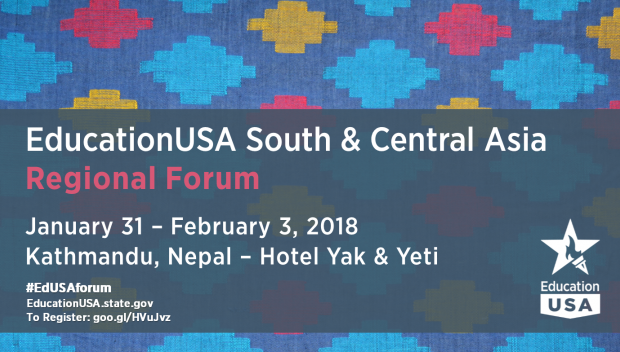
The EducationUSA network will host the EducationUSA South and Central Asia (SCA) Regional Forum January 31 - February 3, 2018 in Kathmandu, Nepal. Regional forums provide opportunities for representatives of U.S. institutions of higher education to convene and share strategies for increasing the recruitment and retention of international students on U.S. campuses.

vendredi 2 février 2018

The U.S. Educational System

by

The U.S. Educational System


One of the most attractive features of the U.S. higher education system is the flexibility it provides through the number and diversity of institution types it encompasses. 
This diversity offers students options to specialize in a variety of academic disciplines and even gain employment training.
More than 4,500 accredited institutions make up U.S. higher education in the United States. Unlike many countries, U.S. higher education institutions are not centrally organized or managed, but are accredited on a national or regional level by independent accrediting bodies.
A variety of institution types offer higher-education degrees. Liberal arts institutions, for example, offer courses in the arts, humanities, languages, and social and physical sciences. The majority of liberal arts institutions are private. Private colleges and universities are funded by a combination of endowments, gifts from alumni, research grants, and tuition fees. Private colleges and universities are usually smaller than public institutions and can have a religious affiliation or be single-sex schools.
Not sure what certain U.S. higher education words mean? Click here for definitions.

Community colleges are another option and provide two-year associate degree programs to prepare students to continue studies for an undergraduate degree or help them gain occupational skills for immediate employment. State colleges and universities, also called "public universities," were founded and subsidized by U.S. state governments to provide a low-cost education to residents of that state. Public universities generally offer access to research opportunities and classes in a wide variety of fields of study. These universities tend to be very large and generally admit a wider range of students than private universities. Each student's interests will guide his/her choice among the many possibilities.
Regardless of the institution type, in the United States, students typically earn credits for courses they take and these credits count towards the completion of a program. Courses are often divided into "core" subject areas to provide the foundation of the degree program and "major" courses to provide specialization in a subject area. Students can also take "elective" courses to explore other topics of interest for a well-rounded educational experience.
The U.S. academic calendar typically runs from September to May and can be divided into two academic terms of 16-18 weeks known as semesters. Alternatively, some schools may operate on a quarter or trimester system of multiple terms of 10-12 weeks.
With the variety of available U.S. higher education options, students are sure to find the right fit for their academic, financial, and personal needs.

mardi 30 janvier 2018

Finance Your Studies

by
Invest in yourself! The cost of living and studying varies across the United States. With the right amount of planning and research, pursuing a U.S. higher education can be made affordable with high returns on your investment.


              In Need of Funding? Find Financial Aid
Start your financial planning as early as possible. Each year international students receive significant amounts of financial assistance for their studies. However, competition is high. Applications for financial aid go together with applications for admission.
When looking into studying in the United States, evaluating your finances should be one of the first things you do. As with any investment, you need to evaluate what's best for your educational and career goals and what you are willing to spend.
U.S. institutions offer a wide array of programs with a wide array of tuition and fees. The United States is a large country and the cost of living varies greatly from place to place. You need to assess your funding and what you are able to spend on your education and living expenses.
Choose your level of study (community college, undergraduate, graduate, short-term, English language)  to learn more about financing your options.

Studying abroad is a once-in-a-lifetime experience. Fill it with memories, not inconveniences.

by

Studying abroad is a once-in-a-lifetime experience. Fill it with memories, not inconveniences.

Meet Genevieve. She used CORT furniture rental twice while studying acting in Los Angeles. 


When Genevieve moved from New Zealand to Los Angeles, California to study acting, she wanted to fully immerse herself in U.S. culture. While she knew she would love taking a full load of classes each semester, she didn’t expect the hardships of moving three times within two years. To help her feel a little more settled, Genevieve called on CORT to deliver furniture for her three-bedroom apartment, where she and two roommates split the cost of furniture rental. Being on a student visa, Genevieve isn’t quite sure what months following graduation will look like, but she knows she can count on CORT whether she stays in the U.S. or returns to New Zealand. See how CORT helped Genevieve fully embrace her study abroad experience in the United States. 

International Student Genevieve

Why Students Studying in the U.S. Rent Furniture

Flexible Leases for Temporary Stays

Not sure how long you’ll be studying in the U.S.? CORT has lease term options that allow you to keep your furniture even after you graduate or have it picked up when your lease term is up. Whether you're staying for three months, a year or longer, CORT helps you find the best match for your stay.

Ready Before You Arrive

We know you’re coming from far away. CORT makes it easy to arrange for your furniture package to be delivered and installed before you arrive to school. Your prompt, professional delivery includes a complete furniture package setup down to the last pillow, lampshade and spoon. Feel at home the moment you arrive.

Get the Necessities, Add Your Style

Instead of purchasing large pieces of furniture that you’ll need to get rid of at the end of your semester, let CORT provide what you need. Rent foundation pieces for your bedroom, living room and dining room furniture, and add your own accessories to make your apartment your own.
CORT provides information about furniture rental for Students in Chinese, Korean, Japanese, Russian, Spanish and Portuguese.

ad pub

ad pub